
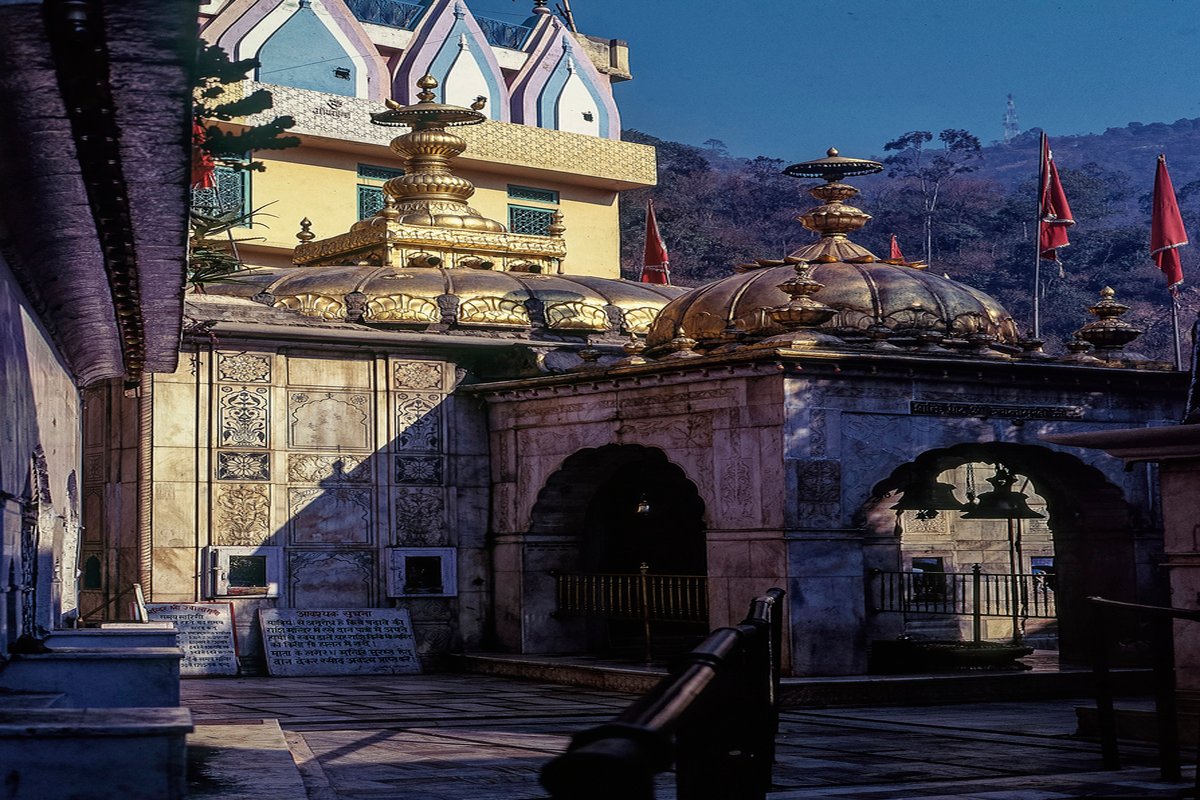
The Jwala Devi Temple, also known as Jwalamukhi Temple or Jwala Ji Temple, is one of the most revered Shakti Peethas in India. Located in the Kangra district of Himachal Pradesh, the temple is unique because the Goddess is worshipped in the form of eternal natural flames emerging from fissures in the rock, rather than as an idol.
Religious Significance
According to Hindu mythology, the temple is one of the 51 Shakti Peethas.
It is believed that the tongue of Goddess Sati fell at this sacred site.
The eternal flames are worshipped as manifestations of Goddess Jwala Devi.
The flames have been burning continuously for centuries and are considered a divine miracle by devotees.
History
The temple is believed to have been discovered by Raja Bhumi Chand.
It received patronage from several rulers, including Maharaja Ranjit Singh, who donated a gold-plated dome to the temple.
Historical records also mention visits by Mughal Emperor Akbar, who is said to have tested the flames and later offered a golden umbrella to the shrine.
Major Attractions
Jwala Devi Temple – Famous for its eternal sacred flames.
Kangra Fort – One of India's oldest and largest forts.
Chamunda Devi Temple – Another important Shakti shrine.
Brajeshwari Devi Temple – Revered Shakti Peeth in Kangra.
Dharamshala – Scenic hill station and Tibetan cultural center.
Best Time to Visit
March to June: Pleasant weather for pilgrimage and sightseeing.
September to November: Clear skies and comfortable temperatures.
The temple witnesses huge gatherings during the Navratri festivals.
The temple generally opens early in the morning and remains accessible until evening, with multiple aarti ceremonies conducted throughout the day.
SEO-Friendly Description
Jwala Devi Temple, Himachal Pradesh, is one of India's most sacred Shakti Peethas, renowned for its eternal flames that symbolize the divine presence of Goddess Jwala. Surrounded by the scenic hills of Kangra, the temple attracts devotees seeking spiritual blessings, faith, and a unique pilgrimage experience.
Religious Significance
According to Hindu mythology, the temple is one of the 51 Shakti Peethas.
It is believed that the tongue of Goddess Sati fell at this sacred site.
The eternal flames are worshipped as manifestations of Goddess Jwala Devi.
The flames have been burning continuously for centuries and are considered a divine miracle by devotees.
History
The temple is believed to have been discovered by Raja Bhumi Chand.
It received patronage from several rulers, including Maharaja Ranjit Singh, who donated a gold-plated dome to the temple.
Historical records also mention visits by Mughal Emperor Akbar, who is said to have tested the flames and later offered a golden umbrella to the shrine.
Major Attractions
Jwala Devi Temple – Famous for its eternal sacred flames.
Kangra Fort – One of India's oldest and largest forts.
Chamunda Devi Temple – Another important Shakti shrine.
Brajeshwari Devi Temple – Revered Shakti Peeth in Kangra.
Dharamshala – Scenic hill station and Tibetan cultural center.
Best Time to Visit
March to June: Pleasant weather for pilgrimage and sightseeing.
September to November: Clear skies and comfortable temperatures.
The temple witnesses huge gatherings during the Navratri festivals.
The temple generally opens early in the morning and remains accessible until evening, with multiple aarti ceremonies conducted throughout the day.
SEO-Friendly Description
Jwala Devi Temple, Himachal Pradesh, is one of India's most sacred Shakti Peethas, renowned for its eternal flames that symbolize the divine presence of Goddess Jwala. Surrounded by the scenic hills of Kangra, the temple attracts devotees seeking spiritual blessings, faith, and a unique pilgrimage experience.